Annual Report 2006
home
עברית  |  العربية  |  English  |  

Download PDF version


Annual Report
2006

 Introduction 

Staff 

Board and Management

Activities in the Field 
Tours | Oppositions | Official signposting | Commemorations | Nakba map in Hebrew | Map of Tel Aviv | Travel guide | Nakba 60 | JNFLebanon  

Creation & Distribution of Knowledge 
Website | Learning Center | Booklets | Presentation | Visuals | Testimonies & videos | Journal | Gallery | Media

Education 
Packet | Teachers | Youth | Evening program | Lectures | Dialogue | Conferences | Women’s group | Disempowered communities | Study group

Building Organizational Capacity
Seminars | Courses | Resource development | Activist outreach | Office management | PR

Future Plans


Introduction

Zochrot seeks to engage the Jewish public in Israel in remembering and talking about the Nakba, the Palestinian tragedy of 1948. The memory of the Nakba is a counter memory that challenges the Zionist version of events that most Jewish Israelis are taught from a young age and come to take for granted as “true.” The Nakba is in one sense the story of the Palestinian tragedy -- the destruction of the villages, the expulsions and the killing -- but it is also a fundamental part of the story of Jews who live here, of the victors of the 1948 war.


The history if the Nakba has been silenced and almost entirely erased from the physical landscape of the country; the names of the destroyed villages do not appear on any maps, and no signs are posted to designate their existence. The narrative of the Nakba, too, is missing from Hebrew textbooks, museums, newspapers, and other cultural channels. Zochrot aims to fill in these empty spaces by bringing Jews and Israelis to acknowledge the Nakba and to take responsibility for its consequences. For Zochrot, this means not only speaking and learning about the Nakba but working to end the Palestinian refugee problem that was created in 1948, by supporting the right of the Palestinian refugees to return to their homes.

Zochrot continued to grow in 2006 in terms of the size of its staff, the scope of its activities and its exposure to the public. As planned at the end of 2005, the organization moved to a central location in Tel Aviv (near Rabin Square) in March 2006, where it rents a space together with Mahapach-Taghir and the International Women’s Coalition. The space houses the offices of these organizations as well as Zochrot’s Learning Center on the Nakba. Zochrot’s current location, in the heart of Hebrew-speaking Tel Aviv, brings the challenge of its work to the center of the mainstream Jewish public.

Staff

Zochrot’s staff grew considerably in 2006, from the equivalent of 3.5 full-time positions to the equivalent of 5.5 full-time positions. The following people worked at Zochrot in 2006: 

Eitan Bronstein, Director (Full-time)

Eitan is one of the founders of Zochrot. Before becoming the Director of the organization full-time, he was an educator and group dialogue facilitator at various organizations including the director of youth education at the School for Peace at Neve Shalom ~ Wahat al-Salaam. Eitan grew up in Kibbutz Bahan and received his M.A. in Hermeneutics and Cultural Studies from Bar-Ilan University.

Norma Musih, Assistant Director (3/4 time)

Norma is one of Zochrot’s founders. She was born in Argentina and raised in Kibbutz Amir. Norma studied photography at Bezalel Art Academy and is currently a Ph.D. candidate in Cultural Studies and Hermeneutics at Bar Ilan University. She was an educator and group facilitator in various capacities before coming to Zochrot.

Talia Fried, Knowledge Management and Design (3/4 time)

Talia joined Zochrot in 2003. She received her B.A. in Sociology and Ethnic/Minority Relations from Boston University and her M.A. in Social Psychology from Tel Aviv University. Talia was born in Boston to Israeli parents and moved permanently to Tel Aviv in 1997.

Raneen Geries, Testimonies Project (1/2 time)

Raneen joined Zochrot in 2004. She is a facilitator of programs on women’s empowerment, parenting, and feminism, and she is active in a number of social change organizations including Assiwar, the Arab Feminist Movement in Support of Victims of Sexual Abuse. Raneen is also a professional vocalist. She earned her B.A. in Social Work from Tel Aviv University and is currently studying toward her M.A. in Clinical Social Work at Tel Aviv University. Raneen was born in Kfar Yasif and now lives in Haifa.

Friederike Schwarzer, Resource Development (1/2 time)

Friederike received her M.A. in Conflict Studies and Human Rights from Utrecht University and has worked for numerous social change organizations in Germany, the Netherlands, and Israel over the past five years. She is an avid horseback rider and joined Zochrot in 2006.

Umar Ighbarieh, Tours (1/2 time)

Umar is a professional group dialogue facilitator with expertise in encounters between majority and minority groups. He worked with youth at the School for Peace at Neve Shalom ~ Wahat al-Salaam before joining Zochrot in 2006. He is currently also a coordinator at the Karev educational program. Umar received his B.A. in Middle Eastern studies, Arabic literature, and group facilitation at the Hebrew University. He was born in Mshierfeh (near Umm al Fahm) and currently resides with his family in Neve Shalom ~ Wahat al-Salaam.

Esther Goldenberg, Office Manager (1/2 time)

Esther is currently working toward her B.A. in History from Tel Aviv University, with an emphasis on Social History and 20th Century European History. She was born in Romania and moved to Haifa with her family at age 10. Esther joined Zochrot in 2006.

Tomer Gardi, Editor of Journal (1/2 time)

Tomer is a writer and researcher on history and culture and lives in Tel Aviv. He earned his B.A. in Literature and Education from the Hebrew University in Jerusalem and his M.A. in Intercultural Education from the Freie Universitaet in Berlin. Tomer joined Zochrot in 2006.

Uri Gopher, Educational Programs (1/2 time)

Uri is an experienced dialogue facilitator, as well as a professional musician and vocalist. He earned his M.A. in Social Psychology from Tel Aviv University with an emphasis on conflict studies and peace education and joined Zochrot in 2006.

Liat Sadeh-Saadon, Facilitator (freelance)

Liat was formerly the Director of School Programs at Bina, a center for activism and education on Jewish identity and culture, and facilitator of dialogue groups at Neve Shalom ~ Wahat al-Salaam. She was raised in Mercaz Sapir, a community settlement in the Negev, and received her B.A. in Non-Formal Education from Beit Berl Teachers’ College.

Youval Tamari, Jaffa Tour Guide (freelance)

Youval is a high school history teacher and group facilitator working in Palestinian-Israeli dialogue groups at Neve Shalom ~ Wahat al-Salaam. He holds a B.A. in History and an M.A. in Urban Planning from the Technion.
 

Board and Management

The following individuals were part of Zochrot’s board and management in 2006:

Eitan Reich, Chair

Ariel Dloumi, Oversight Committee

Oded Tsipori, Oversight Committee

Dr. Louise Bethlehem, Hebrew University

Dr. Fatma Kassem, Ben Gurion University

Amit Landau

Sami Abu Shchadeh


Summary of
Activities for 2006

Zochrot’s activities over the past year were overshadowed by the violence in Lebanon and Gaza. Zochrot’s activities typically deal with remembering places and events that occurred long ago in the past; this year, the extreme violence and desperation of current events prompted discussions at Zochrot about how to pursue its mission while at the same time connecting Zochrot’s work in a relevant way to what is happening in the here-and-now. One of the unique events of this year was an activity in which Zochrot dropped fliers from the rooftops of Tel Aviv (mimicking the flyers dropped by the IDF in Lebanon asking residents to leave). The flier read:

How would you feel if you received a real leaflet like this one? If you had to take your children and leave home? Thousands of Israeli, Palestinian, and Lebanese citizens have been forced in recent days to leave their homes. … The displacement and refugeehood in this land began in 1948 with the Palestinian Nakba, and there, to the source of the conflict, we must return in order to fundamentally change our situation … Maybe the time has come to think about how to build a shared home here together?” [Click here to view the flier]


(Zochrot photo)

In this way, Zochrot tried to clarify the connections between the violence today and the Nakba, the ‘ground zero’ of the present conflict. Other events during the year also prompted Zochrot to re-arrange some of its planned activities for 2006, postponing some and initiating others.

The activities described in this section are divided into five categories: Activities in the Field, Creation and Distribution of Knowledge, Education, Building Organizational Capacity, and Future Plans.


Activities in the Field


Ayn al-Mansi, 18 Feb. 2007 (Yair Gil)

Tours

Tours are the major channel for Zochrot to broaden existing knowledge about the places that were destroyed in the Nakba and to make these sites accessible to the public. There are two types of tours: ‘major’ tours which are open to the general public, and for which Zochrot posts signs and produces commemorative booklets, and ‘by-invitation’ tours, which are tours requested or prepared for specific groups such as students, journalists, activists, international delegations, and so on.

Over the past year Zochrot aimed to broaden the circle of participants (particularly Jews) at these tours, to step up media attention to the tours and to their subject matter, and to continue responding to initiatives by particular groups requesting to visit Palestinian sites. Zochrot exceeded the number of tours in its annual plan by holding 8 major tours (instead of 6) and 24 by-invitation tours (instead of 20).

Major tours of Palestinian sites

Umar Ighbarieh became the coordinator of Zochrot’s tours in August 2006. There were 8 major tours, to Ayn al-Mansi, Miska, Lifta, Bir a-Seba, Tarshicha, the Golan, a-Shajara, and Ramleh. Signs were posted at all of the sites, and new booklets were produced for Ayn al-Mansi, the Golan, Bir a-Seba, Tarshicha, and a-Shajara.

Some notable aspects of these tours were:

-  For the tour to Lifta special t-shirts were printed with the caption “Almost 60 years since the Nakba.” This tour was the first carried out with the participation of Palestinians living in the West Bank, in cooperation with the organization of Youth Centers in the Refugees Camps.

-  Zochrot conducted its first tour of the occupied Golan. Although not technically part of the Nakba (the Golan is Syrian and was occupied in 1967), this tour was carried out with the reasoning that it is important that Zochrot’s tours be geographically and historically encompassing and that Jews in Israel know about the Golan as well.

-  The tour to Ramle was interrupted violently by the police, who confiscated Zochrot’s signs and detained a few activists. Two of the participants were barred from entering the city of Ramle for the next five days.

-  For the tours to a-Shajara and Bir a-Seba Jewish witnesses participated for the first time. In Bir a-Seba, a Jewish man who had served as a soldier in 1948 told about his participation in the conquest of the city. In a-Shajara a Jewish woman who had lived in the Jewish locality of Sajarah until 1946 told about life there before the Nakba.

-  In Bir a-Seba, Tarshicha, Ayn al-Mansi, Ramle and the Golan the activities were carried out with help from local activists, Jews and Arabs.


Najia Aed Diabat, born in A-Shajra in 1936, and Esther Hacham, who lived in the Jewish settlement Sejera until 1946, holding a Zochrot sign (Zochrot photo)

In all 1,100 people participated in these tours, and these events were covered in five newspapers and one radio program.

These tours continue and strengthen Zochrot’s work to recognize the land anew and to know what was destroyed during the Nakba. Palestinians from Ramle and Lod came to the tours as a group of ‘regulars’ almost, and in addition there was of course the participation of refugees from the villages being toured as well as their neighbors. There is an almost regular core group of Jews who come to the tours but a large proportion of the participants are newcomers. It seems that many Jews feel it is important to participate in just one tour in order to understand the subject matter generally, but don’t see as much importance in getting to know all of the sites that Zochrot visits. This pattern is also evident among Zochrot activists themselves and not all come to each of the tours. For 2007 Zochrot is planning an evaluation project (already in progress) to assess the impact of the tours and to gain a better understanding of their impact.

Here is a reflection by one Jewish participant at the tour of a-Shajara.:

I was invited to A-Shajara in order to remember, together with a group of refugees and their families the Arab village which was destroyed in 1948…

We sit in the shade of a large tree and listen to the memories of men and a woman, refugees from A-Shajara, and to another woman from the Jewish settlement Sejera (Ilania). Slowly we can see an image of a place teeming with life. Everyone wants to tell something, and when one of them talks, whispers of approval are heard from the others, or some important additions…. It is a very moving event and not at all easy for the refugees. Many cameras, signs… and an interesting dialogue that starts between the woman from the Jewish village and the refugee from the Arab village.…

The other aspect of my experience is a sense of guilt for an injustice I have not done, but that I feel some responsibility for and a harsh feeling of doubt in regard to the possibility that this small correction would be sufficient. (Sigal Shahar)

By-invitation tours

There were 24 by-invitation tours (four more than planned), three of which were for local groups and the remainder for visitors from overseas. The international groups were mostly associated with Zochrot’s partners or were related to organizations interested in learning a different narrative of the country. 375 people participated in these tours and one of the tours was covered on Hot television (the major cable TV provider). When possible, the tours were accompanied by refugees from the place being visited. Zochrot is expanding its capacity to provide tours to the public and to this end two new staff members have joined Zochrot’s pool of guides by attaining expertise on a particular site.

The tour sites (Canada Park, Lifta, Jaffa/Manshiyye, and Miske) reflect areas where Zochrot has particular expertise (for example, Zochrot member Tamar Avraham is a professional tour guide and has particular knowledge of the area of Lifta), or where Zochrot has a history of activities in the area or special connections with its refugees.

Here is one response to a by-invitation tour:

We wanted to thank you for the tour in Yafa you had with our French group. They came out of it completely convinced that future groups they will be sending must spend a little time in Israel to understand the situation more completely. That statement is a real victory for us. One of the reasons that made them think so is the tour you gave them in Yafa. They all thought it was well done, clearly explained and taught them a lot about the history of Yafa (hence of the Palestinian people).

Jaffa tours for the general public

Over the summer Zochrot initiated a series of Saturday evening tours of Jaffa for the general public, led by Youval Tamari and Esther Goldenberg of Zochrot. The idea for these tours was not initially part of the annual work plan but was initiated by Youval, who is a resident of Jaffa with particular expertise in that location. Also, since walking tours of the city are a popular pastime with both locals and tourists, offering an alternative to existing commercial tours is an important and novel way for Zochrot to reach people who would not otherwise be exposed to Zochrot’s activities and to information about the Nakba.

The Jaffa tours were advertised in “City Mouse” (a popular weekend newspaper insert on city life) and “Time Out,” and were carried out in cooperation with the political bookstore-café “Kafeh Yafa.” There were nine such tours in which 120 people participated. Participation in the tour cost 40 NIS (about 7 Euro) a head and the total income to Zochrot was about 5,000 NIS.


Invitation to the Jaffa tours: "The secrets of Yafo: The rise and fall of Arab Jaffa, and why don't we know anything about it?"

Opposition to building plans on Palestinian sites

Yehud/al-Abbassiyya

The Yehud building plan calls for the destruction of the entire city center of Yehud, once the town al-Abbassiyya, in favor of erecting a likeness of the Italian city of Lugano in its place. This is one of a number of plans in recent years to raze over the remains of destroyed Palestinian villages without any accountability. Zochrot submitted a petition opposing the Yehud building plan, and noted architect Michael Yaacobson, who wrote his thesis project on Yehud/al-Abbasiyya, was and continues to be instrumental in this struggle. Zochrot’s opposition was covered by a local newspaper in the Yehud area owned by Yediot Ahronot, the major Hebrew daily tabloid, and was written up by two overseas journalists. Zochrot activists also met with two refugees from al-Abbasiyya, who today live near Ramallah, and collected testimonies from them. For 2007 Zochrot plans to hold a public event in Yehud about al-Abbasiyya.

Lifta

Zochrot initially submitted an opposition to the plan to build over the remains of Lifta in 2004-2005. This year, Eitan Bronstein was invited to speak about this opposition at a conference in Amsterdam, where a number of experts gathered to discuss and oppose construction on the village.

Struggle for official signposting of destroyed Palestinian villages

In March 2006 the JNF posted two signs in Canada Park bearing information about Yalu and Imwas, the two Palestinian villages in the area that were destroyed in 1967. This was the pinnacle of a long struggle, which included a petition to the Israeli High Court of Justice. Initially the JNF opposed this signing but was forced to agree after the petition was submitted. The act of posting the signs was publicized on two online news sites and in the daily newspaper “Haaretz.” A few weeks later one of the signs was pulled out of the ground and the second sign was painted over in black paint, which covered only the text about these villages. The rest of the text was not damaged. This vandalism against official JNF signs reflects how much the act of signposting the villages touches on a raw nerve for Jews living in the country. These signs were posted by the JNF, not by Zochrot in some “extreme” act. The very fact of their existence on the landscape, of the reminder that there was Palestinian life before the Nakba, is what challenges Israelis.


The Military Commander - Judea and Samaria: The Ayalon-Canada Park is replete with historical sites… including the remains of a church from the Byzantine period and the remains of a crusader fortress. During the monarchic period, in 1268, the tomb of Sheikh Ibn-Janal was built. The village Dayr Ayub, which overlooked the road leading up to Jerusalem, existed in the area of the park until the War of Independence. The villages Imwas and Yalu existed in the area of the park until the year 1967. In the village of Imwas there lived 2,000 residents, who now reside in and in Ramallah. Near the remains of the village is a cemetery. In the village of Yalu there lived 1,700 residents, who now reside in Jordan and Ramallah. There remain a spring and a number of wells in the village.”
The vandalized the sign (text in back was painted over)

Zochrot wrote two letters to the JNF in April 2006, the first requesting that the vandalized signs be fixed and the second suggesting that the JNF post similar signs at the sites of the Palestinian villages in every area they administrate. The second letter was never answered; Zochrot will continue to pursue this matter in the coming year.

Zochrot also won an ‘expenses’ ruling, in which the state authorities were required to pay the organization’s court fees with respect to the Canada Park case.

Numerous letters came in to Zochrot with respect to the Canada park case. Here are two of them:

I wish to thank you sincerely for your integrity and humanity in the great effort you conduct in insisting on a sense of justice in working to place the memory of the villages of Imwas, Yalu and Beit Nuba… Beit Nuba is my own village where I was born and brought up, and where now I am not allowed to even visit the ruins of my home or the graves of my forefathers… It is heartening to see people of conscience like yourselves, amongst others, working to restore a sense of justice in this conflict, so that we can see our peoples, Palestinians and Israelis living in peace together. Ismail

This is wonderful news.  I've a friend whose family was cleansed from Yalu in 1967; I've heard his story, of his childhood memories of that terrible time.  I was sadly pleased today, to share this information with him.  Thank you and all of Zochrot, for the wonderful work that you do. Mary

Commemorations

It has become a tradition at Zochrot to hold annual commemorations to mark the massacre at Deir Yassin and Nakba Day/Israel Independence Day. These events have become an anticipated part of the political calendar and many Israelis are interested in attending. This year Zochrot also conducted activities for Land Day.

Deir Yassin

100 people participated in the Deir Yassin commemoration, which was publicized on NRG (the website of the major print daily Ma’ariv), in various Arab news media and in interviews for a-Shams Radio.

Here is an excerpt from the speech prepared by Eli Armon of Zochrot for the occasion:

 I was born into commemoration ceremonies that were mostly official, where attendance and participation was mandatory. These ceremonies, in which I have taken part since childhood… had the clear purpose of justifying the foundation for a Jewish state at the expense of the territory, land and life of another people. Slowly, as I grew older, a broader picture developed before my eyes that included other people, another story, other events that occurred in parallel.

Through my participation in Zochrot and talking about the possibility to discuss memory from a different, non-official, non-Zionist, non-patriarchal point of view, which is not subservient to policy and does not act in the service of ideological suppression or untruth, I feel for the first time today that I want to remember, to dig into the past, and even to take part in commemoration events. This is the first time that I have taken part in a commemoration event that at the same time asks both to create a new memory and to dismantle the previous memory, which presented itself as the one, single memory.”


Eli Armon speaking at Deir Yassin

And here is one of the responses to Zochrot following the event:

I've just looked at the video clip of your Deir Yasin commemoration. It's the first thing I've seen in nearly 10 years that's given me some hope for any kind of Jewish future. Thank you to everyone in the wonderful Zochrot. Paul

Nakba Day

The Nakba was observed at a number of events on Israeli Independence Day. An overnight ad-busting campaign was carried out by 50 activists in Tel Aviv, Haifa, and Jaffa together with a group called “Almost Forgot.” The group included many new activists.


Herzl says: "I almost forgot -- the University was built on the village of Sheikh Muwannis"

On the evening of Independence Day Dr. Ariella Azoulay gave a lecture on citizenship and nationalism to a full house at Zochrot. Afterwards, on the street outside the Learning Center, activists screened video testimonies of the Nakba as Independence Day revelers passed by. At some point someone cut the power in the Learning Center and the action was temporarily halted until the electricity went back on. In parallel, in Jerusalem, the coalition of organizations “60 years since the Nakba” screened films about the Nakba in the streets of the city. On Independence day Zochrot joined the uprooted people of Miska for a visit to their village (joined by about 200 people) and continued to the Procession of Return in Umm a-Zinat, organized by the Association for the Defense of the Rights of Internally Displaced Persons. About 3,000 people participated in the procession. Both in Miska and Umm a-Zinat Zochrot posted signs to commemorate the villages that were destroyed. 

On international Nakba Day, May 15, 2006, Youval Tamari was interviewed on the highly-rated evening news program “London and Kirschenbaum” on Channel 10, a country-wide station.

Land Day

Land Day was observed in two activities on March 30. During the day Zochrot set up a booth in Rabin Square to distribute information on Land Day and its connection to the Nakba. About 100 people came by the booth. Later, Norma participated in a panel discussion on Land Day at Tel Aviv University, organized by the Hadash party. Actions for Land Day are part of Zochrot’s efforts to challenge the construction of the state as Jewish and for Jews only at the expense of Palestinians born in the country.

Nakba map in Hebrew

Noga Kadman, an activist and geographer with expertise on the 1948 Palestinian villages, has initiated a project in which she will produce with Zochrot a book on the erased Palestinian localities that have been turned into recreational areas. The book will be completed in 2007 and will include a Nakba map in Hebrew. This map will take the place of Zochrot’s planned project to produce a Hebrew map of the destroyed Palestinian localities, a project that was ultimately not carried out in 2006. Information collected by Noga will also be prepared in a format that can be uploaded onto Zochrot’s website.

Map of the Palestinian villages in Tel Aviv

In 2006 Zochrot completed documentation for the production of a map of the Palestinian villages that existed in today-Tel Aviv. This map will include the villages Jammasin al-Gharbi, Summayl, Sheikh Muwannis, Salame, and the Jaffa neighborhoods Abu Kabir and Manshiyye which are today in the borders of the Tel Aviv municipality. The map is based on the format of a regular fold-out city map made by the Mapa Publishing House, on which the Palestinian villages will be superimposed. Existing remains of the villages will also be marked on the map, and on the reverse side there will be testimonies of refugees and photographs, both archival and current.

Travel guide to destroyed villages

Due to the large number of unplanned projects in 2006, the idea of producing a travel guide that emphasizes the destroyed Palestinian villages was not pursued. The book by Noga Kadman that stands to be published in 2007 will fulfill this need to some extent. Thus, visitors to parks and recreational areas will be able to know and locate the villages that existed in those areas until 1948.

60 years since the Nakba

In 2006 Zochrot began organizing toward the 60th year since the Nakba. One initiative is being coordinated by EPER; participants include New Profile, Badil, and the organization of Youth Centers in the Refugee Camps in the West Bank. In this framework New Profile activists initiated and organized the screening of Nakba testimonies and photographs at four street locations in Jerusalem, with the participation of Zochrot. Testimonies by refugees were also read aloud. This activity was covered in Ha'aretz.

The tour to Lifta was also carried out in the framework and with the funding of this coalition.

Protest in response to JNF street installation

Another unplanned activity that was arranged in response to current events was a procession to protest an outdoor street installation by the JNF. The JNF installation used oversized ‘blue boxes,’ installed on Rothschild Blvd. in Tel Aviv, to relate its past achievements in a glorified way.  (The ‘blue boxes,’ which are iconic to the Zionist movement, were used to collect funds from Jews around the world in favor of Zionist development). The JNF’s boxes on Rothschild Blvd. were painted by artists, some of them quite well-known, and the installation called on the public to donate to the rehabilitation of forests in the north that were damaged during the second Lebanon War. The JNF also distributed information about itself, such as that the JNF ‘made the wilderness bloom’ in the country. The information  that was provided to the public was missing a part that was too important to Zochrot – all the tens of Palestinian villages that were destroyed in the Nakba and on whose remains tens of JNF forests and recreational areas in the country were constructed. Zochrot printed a flyer detailing the names of the JNF sites and the villages they were built on, and explaining the rationale for its protest. The activists carried their own oversized ‘blue box’ bearing the message: “The Jewish National Fund – for whom?” Next to it was a map of the country on which the words “desolate area,” “swamps,” “sand,” and so on, were painted. The event was covered in the newspaper “Ha’ir” [‘The City.’]

Protest against the war in Lebanon

In July the war in Lebanon broke out and upended the organization’s work, both in terms of the mood and of the work plan that was prepared and suddenly seemed irrelevant. Indeed, it was not possible to continue dealing with the Nakba of 1948 when such a horrible tragedy was unfolding in the present for hundreds of thousands of Arabs and Jews. There were several internal discussions on the question of whether Zochrot should respond to the war. There was no taken-for-granted answer because Zochrot typically does not conduct activities related to present aspects of the conflict such as the wall, extra-judicial executions, and the like. A decision was reached that Zochrot should respond to the war due to the severity of the situation and to the sense that we cannot stand on the sidelines and merely watch. At the same time, it was important that Zochrot’s response emphasize the basic idea of the organization, which is that the Nakba is the source of the conflict, including of what is happening in Lebanon.

Zochrot printed and dropped thousands of fliers (as mentioned above) from high rooftops in the center of Tel Aviv, and also passed out the fliers to passersby on the streets during the heavy traffic hours of Friday morning. The activity was covered in Maariv NRG and elicited difficult responses from Israelis on the street and to the organization’s website.

The “Black Shamrock” coalition in Northern Ireland received Zochrot’s report on the activity and replicated it in Belfast, using an English version of the flyer that Zochrot prepared for them.

Zochrot also publicized a position paper on the war.

Finally, Zochrot also collected donations locally and sent them to an organization in France that passed them on to the new refugees in Lebanon. Two people on Zochrot’s mailing list asked to remove their names following these actions. One of these wrote:

I would like to ask you not to send me further mail regarding your activities. First we will collect money for the refugees from the north and later for the refugees from Lebanon. Thank you very much.

Zochrot’s collection of donations was also reported in the internet media by 02 net and Nana.

Creation and Distribution of Knowledge


Titles at the Learning Center

Zochrot seeks to create new knowledge about the Nakba, primarily in Hebrew, and to distribute it via diverse channels. Although Zochrot has been working in this area since the organization began, there is still the sense that we are very much at the beginning and that there is ever more undiscovered information about the Nakba and untried ways to express and disseminate this material.

Website

Zochrot’s website continued to grow in tandem with the organization’s activities. In 2006, 100 pages were added to the website out of 490 total pages. A major project in 2006 was to conduct a massive information update on all the localities that were destroyed during the Nakba. Data were collected from newer sources, and about 30 volunteers contributed to amassing and writing up this information. The aim of this project is to revamp the infrastructure of the Nakba database so that the surfing experience will be more intuitive and aesthetic, and in order to take advantage of technological possibilities to link data on the destroyed villages with images, testimonies, visitor comments, and the like.

The number of visitors to Zochrot’s website continues to increase, as can be seen in this chart. According to the graph, in April 2006 an average of 577 people visited the site on a daily basis and an average of 5,093 files were downloaded daily. In December this tripled: 1,807 visitors per day received 13,787 files. It is interesting to note that visitors from over 100 countries visit the site, including many Arab countries. Visitors from the U.S. make up the largest group of visitors and Israel is in second place. This continuing increase points to a growing awareness to the activities of Zochrot in the country and around the world.


Usage statistics for Zochrot's website, April 2006 - February 2007

Many people wrote letters to Zochrot via the website, some letters discouraging and others very encouraging, such as this one:

I take this opportunity to express my commendations and praise on the great work you are doing. There is still a glimmer of hope for the few sane humans left on this earth. The tears we have shed have not been wasted. You inspire me to keep dreaming, hoping and strengthen my faith. I dream and wish to walk beside you. Please include me in your mailing list.

Learning Center and Research Guidance

Zochrot’s Learning Center continued to expand in tandem with the organization’s activities and with the acquisition of new materials, particularly books and films. This year about 50 new titles were added to the Learning Center. Likewise, original materials created by Zochrot were also added, such as tour booklets and testimonies. Some of the materials are also contributed from the public, such as the materials that were accompanied by this letter:

I am a senior citizen living in Jerusalem and while clearing out some of my books I discovered some interesting notes in our book on Masada collected by my husband, now 93, a former tour guide. He became a guide in 1965, came to Israel in ‘48 and is suffering now as he and his generation were part of the distortion of history which you are  trying to correct. He knew Yadlin and says I may send you these notes hoping they may be of some use to you.

Visitors to the center include architecture and geography students, journalists, authors, artists, directors, tour guides, and regular interested members of the public. In 2006 tens of people turned to the Learning Center and toward the end of the year Zochrot began to keep a visitors’ list.

The Learning Center houses materials that cannot be found in libraries and universities and Zochrot has much unwritten knowledge and connections that help people to access information on specific places. Researchers to the Center take advantage of the experience and expertise of Zochrot’s staff and seek out their guidance on different questions, such as developing their research questions, helping with translations, connecting them with refugee families or directing them to the work of other relevant researchers or organizations. Here are examples of some researchers’ requests to the Learning Center in 2006:

I am an architecture student at Tel Aviv University. This semester I am taking a course on building preservation. The subject of the course is water-well structures. In our search for a water-well structure to work on, we came upon the home at 26 Shrira Gaon St. … We have spoken to many people in order to research the history of the home and the name of the owner before 1948. Until now, our search has been in vain, as if the history was erased… We would be grateful to you if you could help us… or at least to locate the name of the Arab owner of the lands in order that we can pursue the history of the house. Thanks in advance, Tal

Zochrot also receives materials that are donated by people on subjects related to the Nakba. The great challenge that remains, and that Zochrot hopes to take on in 2007, is to catalogue all its information and make it accessible to the public. This will entail developing a system to catalogue and access different types of materials (texts, maps, images, and so on) in the most efficient and convenient way possible, as even Zochrot activists sometimes have difficulty finding particular materials.

A special project is being carried out to catalogue Zochrot’s video materials that are found at Zochrot. There are hundreds of hours of footage that need to be catalogued in order to make these materials accessible to activists, journalists, historians, and the like.
)

Booklets


Cover of Zochrot's booklet for Bir a-Seba (Beersheba

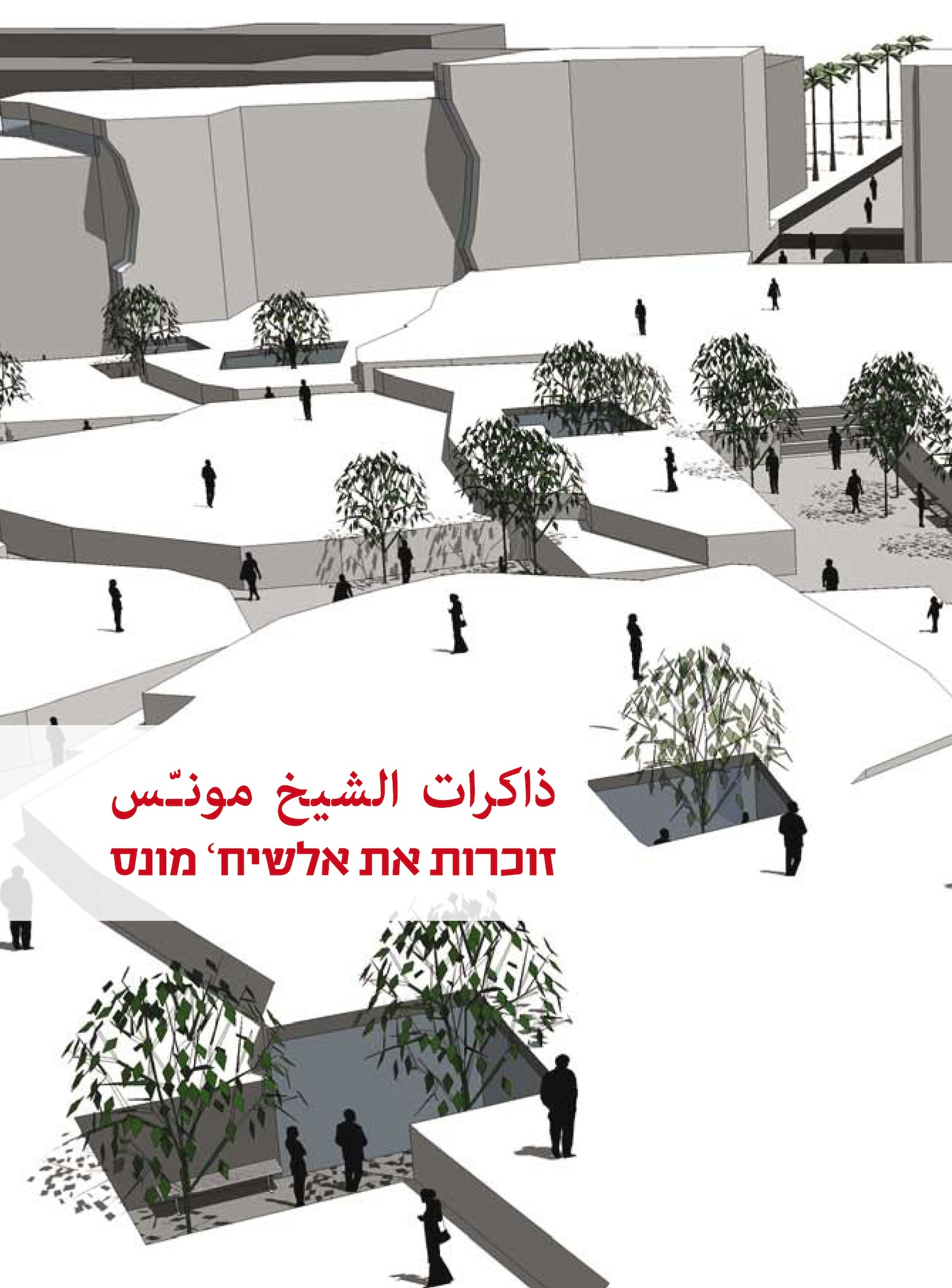
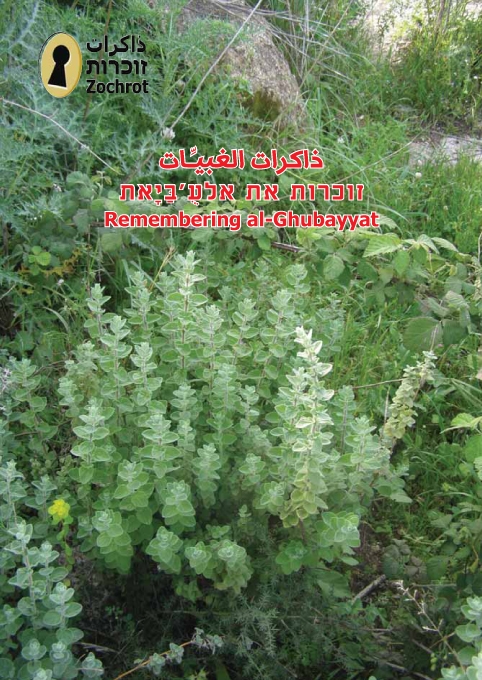
In 2006 the following tour booklets were produced by Zochrot as part of its general activities: Bir a-Seba, a-Shajara, the occupied Golan, Tarshicha, and Ayn al-Mansi. These booklets are highly requested not only at Zochrot events themselves, but also afterwards. Many people contact Zochrot throughout the year asking to receive the booklets, since they contain original information and research on specific villages which cannot be found anywhere else. In 2006 Umar Ighbarieh became the coordinator of major tours and booklets, and under his direction the booklets have become more professional. Also, beginning with the Bir a-Seba booklet an effort has been made to translate at least half of the texts into English, whereas before the booklets were printed in Arabic and Hebrew only.


Nakba Presentation


Cover of Nakba Presentation CD

This year Zochrot completed a comprehensive presentation on the Nakba which includes 11 chapters and over 90 slides. This multimedia presentation is in Hebrew and English and includes basic information about the Nakba, particularly from a Jewish Israeli viewpoint; video segments of testimonies by Palestinian women and men; a testimony by a Jewish soldier who took part in the Nakba; and short videos of Zochrot activists talking about their work. The presentation has already been used with different audiences – Israelis, Jews and Arabs, and people from overseas. The responses have been excellent. A 25-year-old Palestinian woman who saw the presentation thanked Zochrot and said with emotion that this was the first time she had come upon so much information about the Nakba. The presentation will be packaged at the beginning of 2007 as a CD with an explanatory booklet and will be sent to different groups, such as schools, youth groups, and others. It will also be part of an educational packed on the Nakba that Zochrot has been developing over a number of months.

Visual materials

Zochrot places particular emphasis on the visual aspect of information that is disseminated to the public about the Nakba and about Zochrot’s particular activities. Some of the visual materials produced this year were: T-shirts for the Ramle tour and for the “Return to Lifta” tour (in Ramle, t-shirts were a preferred way for participants to express their message since the authorities had confiscated Zochrot’s signs at the previous tour); printed invitations to publicize the summer walking tours of Jaffa and to extend the call for contributions to the new Journal and Gallery; a special flier for a talk on “Spaces of Refugeehood” that was posted at the local universities, as well as the Lebanon war flier and the flier for the JNF protest mentioned above. 

Testimonies and videos


Cover of Zochrot CD, "Women's Testimonies of the Nakba"

Zochrot’s testimony collection project continued and expanded in 2006. Raneen Geries works on this project in a 1/2-time capacity. She collects testimonies on video, transcribes them, has them translated to Hebrew, and edits them into short films. Toward the end of the year she also began writing up the material she collected in the form of articles about different villages, at the initiative of the Badil organization. Three stories, on the subject of Tarshicha, Suhmata, and the roles of women in the Nakba, were published by Badil and Zochrot on the organization’s website and were translated to Hebrew.

20 testimonies of Palestinians who experienced the Nakba were filmed on video in 2006. They were transcribed and edited into short films. Ten testimonies were collected from women and ten from men, including two of brothers who live next to Ramallah. The remainder of the subjects live in Israel. In addition, three of the testimonies were collected in Syria (two from refugees of Tarshicha and one from a refugee of Amqa). Most of the testimonies were later included in booklets that Zochrot prepared in advance of village tours.

A special 15-minute film was made of testimonies of women who experienced the Nakba, translated to Hebrew and English. This film was presented to a number of audiences locally and abroad, and received positive responses.

Four short films were produced using the testimonies footage and other new footage collected by Zochrot: On Zochrot’s tour of Ayn al-Mansi, on the commemoration event at Deir Yassin, on the life of Abadalla Zaqut, and a compilation of women’s testimonies of the Nakba (mentioned above).

At left is the postcard that was sent out to invite contributions to the Magazine and Gallery. The upper photo shows new Jewish immigrants in Israel, while the bottom image shows expelled Palestinians making their way to Lebanon in 1948.


Above is the postcard that was sent out to invite contributions to the Magazine and Gallery. The upper photo shows new Jewish immigrants in Israel, while the bottom image shows expelled Palestinians making their way to Lebanon in 1948.

Journal (“Fissure”)

Work to produce a literary-artistic journal on the Nakba called “Fissure” is underway. It will be published twice a year and will deal with the Palestinian Nakba and its various effects on our lives until today, both through texts and artwork. Tomer Gardi is the editor and works in a 1/2-time capacity, and Norma Musih works alongside him.

A working relationship was created with the organization Farhessiya, a group of artists, designers and educators whose purpose is to contribute to the development of a civil language of visual communication. Zochrot produced and distributed a Call for Contributions to writers and artists with the aim of reaching as many as people as possible and to inspire writers and artists to reflect on the Nakba. There were 60 proposals of which 20 were accepted. For Zochrot, this public response is almost as important as the final product of the journal that will be published in May 2007. Almost all the contributors constitute a new audience for Zochrot. In this way they have been given a channel of action that did not exist before and this has produced a kind of community of creators for Zochrot.

Art gallery

Preparations for upgrading the Art Gallery at the Learning Center began in 2006, and the first exhibit was selected. It will be displayed in conjunction with the publication of the first issue of the magazine.

Zochrot in the media

Like other social change organizations, Zochrot aims to have its activities appear in media outlets so that its agenda will reach a broader public. There is the sense that the Israeli popular media still finds it difficult to digest Zochrot’s story. The Nakba and the issue of the refugees is perceived usually as issues that belong to Arabs, enemies of Israel, and should in no way interest an Israeli organization (such as this article). Together with this, the media, particularly local and online, do not ignore Zochrot’s activities. Here are examples of some ‘talk-backs’ to an article posted in Ha’aretz about one of Zochrot’s activities (the original talk-back page is available here, in Hebrew):

Kudos to these activists, who remind all of us that we must not forget (A Democrat)

The Nakba must be remembered – because the Arabs wanted to annihilate the Jews in the Land of Israel (There’s a Limit)

May the hands of the minority be strengthened, to their credit maybe there may be peace here one day (Second Generation to the Holocaust)

The Palestinians brought the tragedy on themselves because they didn’t want to accept the idea of a partition (The Preacher)

It’s fine to remember the Nakba, but let us not forget why it happened (A Messenger)

European Jewry can only wish it had been expelled and not exterminated (Life is Beautiful)

Sorry you lost the war that you started against us. Really, sorry. (The Yahud)

Congratulations for raising awareness of the tragedy of the Palestinian who live and have lived here (Proud of You)

In 2006 there were 12 articles on Zochrot or Zochrot’s activities in the printed media in Hebrew, one in English, and one in Arabic. There were also 8 internet articles in Hebrew, 2 in English, and 7 in Arabic. One of the more unique items was an extended interview with Norma Musih and Eitan Bronstein on a 2-hour program on Reshet Aleph, one of the national radio stations.

Part of Zochrot’s strategic plan for 2007 is to improve Zochot’s public relations capacity.

Education


Photos from a Nakba Day activity at an elementary school (Norma Musih)


Teachers’ workshops

The teachers’ groups coordinated by Zochrot bring together educators from different fields to develop learning materials about the Nakba and to train the teachers in using these materials in their classrooms. In 2006 Zochrot completed work with two teachers’ groups and opened a third group. Members of these groups are community workers, teachers’ college instructors, and high school teachers in different fields such as geography, literature, and history. The teachers have different levels of expertise about the Nakba and for many, the group was the first time they encountered these kinds of materials.

The groups met about every other month for four hours at each meeting. These meetings included a segment that introduced new material about the Nakba (such as a talk, a film, or a group exercise) and a workshop segment in which the materials were discussed and processed. The educational materials and lesson ideas were the original work of Zochrot prepared especially for the purpose of this group. The teachers applied the materials in their own classrooms and brought feedback back to the group, such that a great deal of new knowledge about teaching the Nakba accumulated over the course of the year.

There were also two special meetings with the teachers’ groups: One was a tour to the village of Summayl together with a refugee from the village, and the other was a weekend seminar in which the first two teachers’ groups summarized and concluded their work during the first year. Participants in the first group have also asked Zochrot to continue to accompany their work during the school year so that they can go deeper into the subject.

Zochrot is planning to continue with smaller sub-groups in 2007.

One of the exercises was to write a letter to a refugee. Here is what one of the participants in the group wrote:

Dear Woman,

I am writing you and in fact what to meet you. I want to hear your story, to try to contain your pain – to ask your forgiveness, to apologize, to explain, to examine with you how to correct.

I want to tell you that your story is also the story of my life, that the people who expelled you from your land and from your home are people whom I live with.

Dear woman, where are you now? How do you live? Let’s meet. I want to listen to you tell the story. Are you willing to tell it?

I am here trying to pave a cleaner path [for my daughter], for my soul and for all the children that I teach and love. Later we will think together how to make this correction, if it is at all possible.

Nakba educational packet

The purpose of this project is to produce a set of materials that will include lesson plans on the Nakba using different materials such as videos, maps, and historical documents, which together will provide a fascinating and creative learning experience for high school students. Information on the Nakba exists in different books and in human memory, but the challenge remains how to organize and present this knowledge in ways that are best suited for learning, particularly by young people and by members of the Jewish majority.

The education packet is being developed with the teachers’ groups run by Zochrot (mentioned directly above). Teachers in these groups tested the different lesson plans in their own classrooms and helped to hone and develop the different plans. In the coming year Amaya Galili of Zochrot will coordinate the knowledge accrued in the teachers’ groups and integrate them into the packet. The education packet will be designed by Zochrot in an appealing format that will inspire learners to explore and engage with the various materials, and production of the packet is expected to conclude in 2007.

Work with youth

Zochrot works with different groups of young people as young as elementary school pupils and up to university level. Typically, schools and organizations turn to Zochrot asking for the organization to prepare specific activities, such as lectures, tours, or workshops, for their group. In 2006 Zochrot conducted 10 such activities in which 650 students took part.

One of the most important and successful activities last year was prepared for an Arab-Jewish elementary school on the occasion of Nakba Day. All the teachers and students of the school took part in constructing a  map of the destroyed 1948 Palestinian villages. In the morning, the teachers and Zochrot staff prepared the infrastructure of the map by placing the longitude and latitude lines in electricians’ tape on the school yard. Once the map grid was prepared, the entire school took part in returning the destroyed villages to the map and decorating it with painted stones. One of the pupils, whose family was expelled from Suba, returned the card for Suba to the map and then read an essay aloud to the school. After the activity, the school went to tour Suba with Zochrot.

The pupils and school staff were very enthusiastic about the activity, and one of the teachers said that the activities on that day brought the educational work of the school up to a new level. The school now wants to make this activity an annual tradition.

Another example is work with a number of groups from the organization Windows, which are groups of young people who deal with the Israeli/Palestinian conflict. Zochrot conducted a number of workshops for different Windows groups.

Evening program at the Learning Center

One of the important avenues for reaching the (mostly) Jewish public in Israel is the series of evenings at the Learning Center. In 2006 there were 14 evenings, four of which included film screenings, and altogether 260 people took part. Some of the attendees arrive regularly but there are also always some new faces. The open evenings are a way to diversify Zochrot’s audience and reach people on the basis of cultural or academic interests who would not otherwise join a Zochrot tour. Zochrot’s location in the center of Tel Aviv also makes it a much more convenient and attractive location for Tel Aviv locals to spend an evening. These evenings are also listed in the “City Mouse” lifestyle insert and in “Time Out,” which increases Zochrot’s exposure.


 Flyer promoting an evening film-screening and lecture at the Learning Center

Lectures for groups

In 2006 Zochrot held 13 lectures on the Nakba and on Zochrot’s activities at the request of specific groups. Most of these groups were students and activists from overseas. About 160 people took part. An example of one lecture was a talk at the School for Architecture at Tel Aviv University for students taking a seminar on Beit She’an. Beit She’an is today a small Jewish city in the north, which has an extensive history dating thousands of years and is the site of a major archeological park. Eitan Bronstein told the students about the Palestinian city Beisan which existed there until 1948 and which is not mentioned in the signs at the archeological park.

Dialogue between Palestinian refugees and Jewish residents

Dialogues between Palestinian refugees and the Jewish residents living in the areas from which they were expelled were carried out two years ago but unfortunately did not take place in 2006. It seems that in the current political situation it is very difficult to recruit Jewish participants to meet with Palestinian IDPs who were expelled from the exact same areas where they now live. The dialogue between the Palestinian refugees of Bir’em and the Jewish members of Kibbutz Bar’am which took place in 2004 thus remains a one-time project and it seems even more unique now in light of the difficulties in replicating the project. Zochrot will continue to seek out opportunities to repeat this project and will certainly take advantage of them when they arise.

An unplanned activity for 2006 which was similar in some way to the refugee/resident dialogue was a series of encounters between Jewish and Palestinian women. Some of the women in the group were connected (as residents or as refugees) from the same location in the North of the country. This project is detailed below.

Presentations at conferences

In 2006 Zochrot presented at ten conferences locally and overseas to a total of 860 people. Five were academic conferences and the other five had a more political-activist character. Eitan Bronstein was invited to speak in the Netherlands three times, twice to lecture on Lifta and once as part of a speaking tour together with Leila Elali, a Palestinian woman from Lebanon who is the director of the organization al-Najdah. Eitan Bronstein and Leila Elali also traveled to the World Social Forum in Caracas for a joint presentation.

For one of the conference in Israel Eitan Bronstein wrote a text about local opposition of Jewish people to the Nakba (Hebrew only). Requests to Zochrot to present at conferences evidence the growing awareness of Zochrot’s work both at the academic level and at the organizational level in Israel and around the world. (This academic standing is also expressed in the many requests by students for information from Zochrot on topics related to the Nakba). The conferences also provide rare opportunities for Zochrot to be exposed overseas and to connect with different researchers and organizations that work along similar lines.

Women’s group


The women's group toured Amqa last May

One of the unplanned activities that Zochrot conducted in 2006 was an ongoing encounter between Jewish and Palestinian women. The group had 15 participants aged 40 – 70 that began meeting independently in 2001 on a neighborly basis in the area of Abu Snaan. Until the beginning of 2006 these were primarily social gatherings. The group made contact with Zochrot and Zochrot offered to facilitate a series of meetings in which they could broach the topic of the Nakba and its meaning in their lives. The group discussed the possibility and decided to ‘jump into the cold water’. The transition was not easy. Two of the Jewish women left the group but others joined in their place. There were 12 meetings, three hours each, facilitated by Raneen Geries and Liat Sadeh Saadon of Zochrot (Liat is an experienced facilitator who lives in the area and was employed by Zochrot on a freelance basis for this project). The women discussed the places where they reside or were expelled from and what happened in those places in 1948. They also watched films and heard talks about the Nakba. The culmination of this series of meetings was a tour to the village of Amqa, a village from which one of the group members was expelled, together with family members. Following this tour the women asked to carry out a public tour of Amqa together with Zochrot, including to produce a booklet as well as video filming of testimonies about the village. This tour is expected to be carried out in 2007.

Coping with the Nakba in disempowered communities

Another project that was not planned for 2006 was carried out together with the organization Mahapach-Taghir. This is a student organization that works to advance educational and political empowerment among disempowered communities in Israel. Mahapach-Taghir activists are located in seven different communities in the country (five Jewish and two Palestinian) and work alongside the community to raise political awareness and to advance the community’s interests (for example, by demanding better municipal or educational services). For each community there is a coordinator and a number of student activists who work in that area, and there is also a country-wide steering committee.

The joint project for teaching the Nakba in disempowerment communities is important to Zochrot because it offers the opportunity to reach members of the public that Zochrot typically has little contact with. Disempowered Jewish populations in Israel usually hold very nationalistic views even though they must often pay the greatest price for the continuation of the conflict. Zochrot has little experience in raising awareness of the Nakba in this sector and therefore this project was planned to contain two phases, the first phase for raising awareness of the Nakba among the staff of Mahapach-Taghir, and the second phase for transferring this information from the staff directly into the communities.

The first phase of the project was carried out in 2006. Zochrot held six educational meetings with Mahapach-Taghir to introduce staff to information about the Nakba. There were separate meetings with the steering committee, the country-wide staff of coordinators, and with the student community activists of Mahapach-Taghir, both veteran and new. Also, a tour was organized to the Abu Kabir area in Tel Aviv, where Palestinian lived until the Nakba, for the coordinating staff of Mahapach-Taghir.

The next stage of the project, in which which knowledge about the Nakba will be passed onward to the disempowered communities where Mahapch-Taghir is active, will be carried out in 2007.

Study group on the right of return of the Palestinian refugees

The study group on refugee return began meeting in 2006. Members of the group study the practical ramifications for the return of the Palestinian refugees and explore different options or questions that arise from this. This project was planned and constructed together with the Badil organization in Bethlehem (the organization for Palestinian Refugee and Residency Rights), where Zochrot coordinates the meetings of the Jewish group (which includes about 20 participants) and Badil coordinates the Palestinian group.

The participants in this project all accept the right of return in principle, such that this point is not up for discussion in the group. Instead, the participants aim to examine, within a potential situation such as a future peace agreement, how the right of return would be carried out in practice.

The Zochrot and Badil groups meet separately throughout the year and periodically there are joint meetings of both groups together in Bethlehem. The Zochrot group includes the staff members and management of Zochot, other activists and academics. There were 8 meetings in total in 2006: The Zochrot group met on its own five times (some of these meetings included lectures and open discussions to which the wider public was invited) and three joint meetings were held with the Badil group in Bethlehem. Toward the end of the year it was decided that the aim for 2007 is to draft in writing some of the different models for actualizing return.

Building Organizational Capacity

Internal seminars

Zochrot held two internal seminars to discuss the organization and its work, with the participation of Zochrot’s staff and management (15 people in total). During the first seminar participants surveyed the development of Zochrot from its inception until the present, and discussed where the organization is heading in the future. During the second seminar Zochrot held a psychodrama workshop that helped members and staff deepen their understanding of where each person stands with respect to the organization and to each other. Participants also discussed the work plan for 2007 and assessed a pool of criteria for choosing future projects. These criteria were narrowed down to 10 primary factors that can serve as a kind of tool for defining organizational priorities. The most important criterion of these was “relevancy and influence on the Jewish public in Israel” and “connecting activities to communities and or local initiatives in the country.” In other words, the Zochrot wishes to continue pursuing a grassroots, “bottom-up” approach to the Nakba.

Courses

Eitan Bronstein participated in an intensive course on campaign management organized by Shatil and the Betsefer advertising company. Friederike Schwartzer participated in a seven-day program offered by Shatil and the Responding to Conflict organization on conflict management.

Resource Development

Friederike Schwartzer has been responsible for resource development in a 1/2-time capacity since May 2006. Her roles includes fundraising and strategic planning for the organization.

In 2006 Zochrot had an income totaling €280,000. This represents an increase of 45% from 2005. Zochrot’s partners in 2006 were: The Mennonite Central Committee (MCC), Kerkinactie, ICCO, Cimade, CCFD, EPER/HEKS, Broederlijk Delen, Oxfam Solidarity Belgium, Misereor, Medico International, and Zivik.  

Activist outreach

Zochrot aims to galvanize local activism rather than having activities initiated solely by the staff of the organization, which is located mostly in the center of the country. As stated, most of the large tours in 2006 were initiated or carried out with local individuals, Palestinians and Jews.

During strategic discussions that were held in 2006 Zochrot decided to open a branch in Jerusalem in March 2007, which is now underway.

At the end of 2005 Zochrot faced one of its most serious challenges when almost an entire group of activists in Haifa left the organization on ideological grounds. This departure hampered the ability and the scope of the activities in Haifa but the departees remained in good contact with Zochrot and some of them were later employed as freelancers. The crux of the disagreement with the activists was over whether people still serving in the military reserves may take on central positions in the organization. A letter of explanation was sent to Zochrot’s friends and partners describing the different points of view that were expressed and the changes to the organization as a result of the activists’ departure.

Office management

Because of the growing size of the organization, Zochrot has reached a point where it is no longer feasible for staff members to manage the office as part of their general duties. Therefore in May 2006 Esther Goldenberg joined Zochrot to manage the office in a 1/2 time capacity. Her responsibilities include general office work, finances, updating the internet site, and organizing the office in such a manner that the knowledge and information that exists with Zochrot remains organized and accessible. Esther has also served as a Zochrot tour guide in Jaffa and has represented Zochrot at various meetings.

Public relations

Zochrot regularly sends information on its activities to its email list, which at the end of 2006 contained 1,700 addresses.

In the middle of the year, Zochrot developed a more attractive newsletter format for mailings which presents activities in a more visual and engaging manner. Each activity or notice in the newsletters is linked, where possible, to further information on the website. Another benefit is that the collection of newsletters serves as a chronological catalogue of all the organization’s activities throughout the year. Forty-five mailings were sent out in 2006, about half of which were designed in this new format.
Here is one letter from a woman asking to join Zochrot’ mailing list:

On Saturday friends of my family came to visit us [at the moshav where we live]. They live in Milwaukee… We took lots of walks around the moshav. Besides the houses in the moshav, the chicken coops and agricultural lands, there remain standing four or five old stone houses… The girls (18, 21) asked me who lived there before. What happened in ’48. Their father said ‘they moved.’ They asked ‘how?’ I said ‘by force.’ We kept going. With a small cloud of conscious sadness (which is usually swallowed up in the day-to-day of living) hovering above. After they drove away, on Sunday morning, I typed ‘Zochrot’ in Google. I sent them an email with the link to the Arab name of the moshav. I wrote that it was my answer to who lived there before and what happened to them. That same morning I sent you a request to join your mailing list.

Thanks or the opportunity you have created in order to allow me to search and give an answer, both to my guests and to myself. I would be happy if this cloud were less swallowed-up in my daily life. I want to remember.

Future Plans

In 2007 Zochrot plans to continue and broaden existing projects as well as to begin a number of new projects:

1. The project with Mahapach-Taghir will be broadened

2. Zochrot will carry out a thorough assessment of its Tours project

3. The Learning Center will be organized in a more orderly way and made more accessible to the public

4. The Nakba educational packet will be completed

5. The website will be updated in terms of form and content

6. Zochrot’s work with the media will be improved

7. The art gallery will be opened

8. The journal “Sedek” [Fissure] will be issued

9. A film will be produced about the village Salame with the assistance of Zochrot and funding by ICCO

10. The book by Noga Kadman on the destroyed Palestinian villages will be published by the November Publishing House, with Zochrot’s assistance


Related pages
Annual Report 2005
סיכום שנת פעילות 2006
סיכום שנת פעילות 2004
Annual Report 2004
סיכום שנת פעילות 2005