עברית | العربية | English | ![]() |
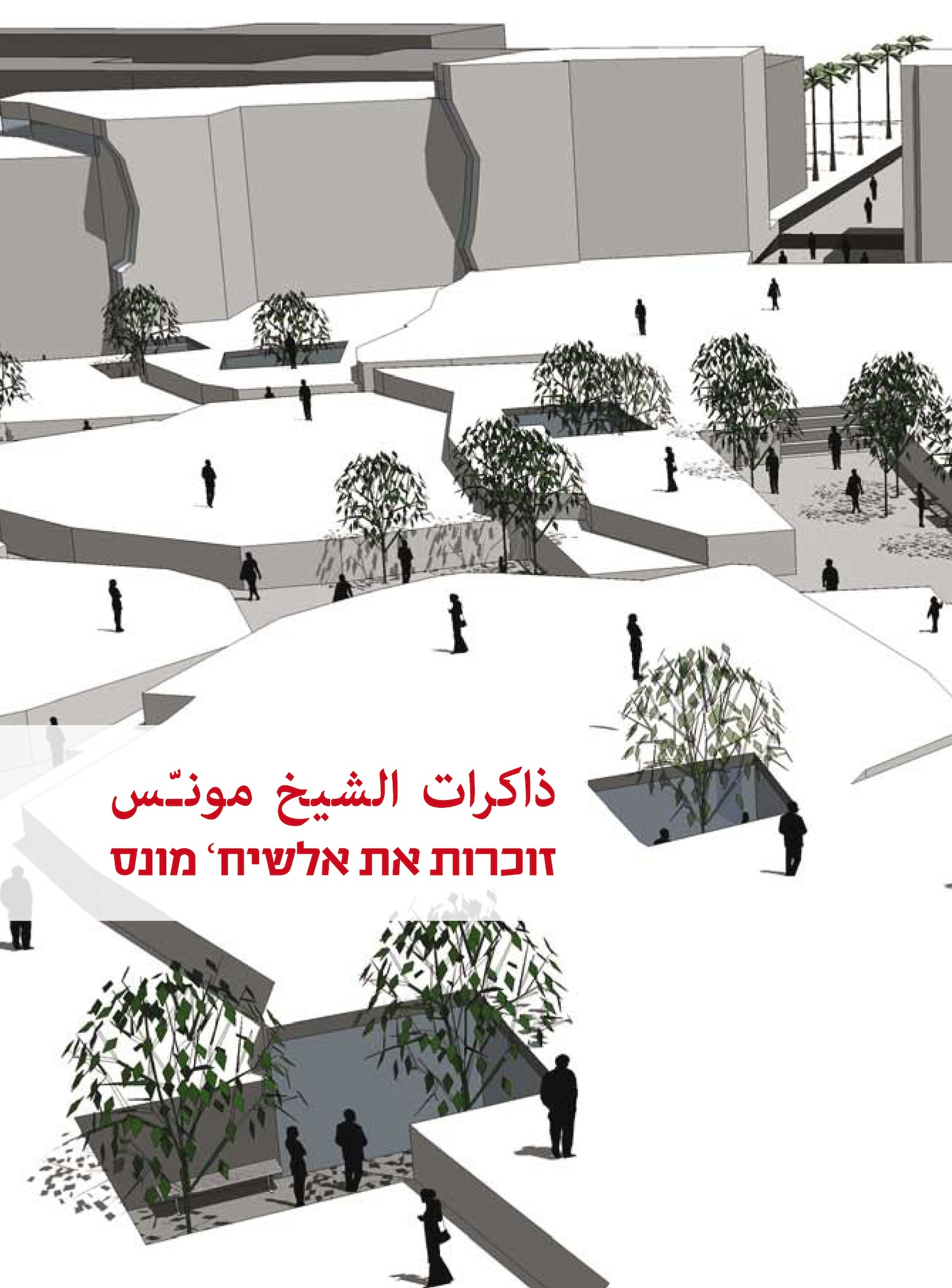
A Palestinian Village in the Heart of Tel Aviv? The Israeli NGO “Zochrot” seeks to commemorate the remains of abandoned Palestinian villages, which existed in the area where Tel Aviv extends today, and to settle Palestinians there. Beside ideology, they claim that in this manner the city will be salvaged from its “one-dimensionality” The Israeli NGO “Zochrot” has presented architectural plans meant to remind Tel Avivians that their city was built in part on “Palestinian lands.” "The catastrophe of the Palestinian people is silenced and is not present in the physical and cultural landscape of Israel,” claims the organization, whose members ask to preserve the Palestinian villages in Tel Aviv. On Thursday evening (11.08.05) the offices of the organization “Zochrot” in Tel Aviv were filled with tens of people seeking to express support for architectural plans that demand that the memory of the Palestinian villages in Tel Aviv, which were abandoned during the War of Independence, be commemorated. “Our aim is to bring about recognition of the moral debt for the injustice caused by the state and its institutions to the Palestinian people, and to advance the fulfillment of the right of return for refugees,” says the organization. The city born from the sand? A few of the remains of the Palestinian village of Summeil still exist at the corner of Arlosorov and Ibn Gvirol streets. Today “Century Tower” stands on part of the lands of the village. The municipality intends to destroy the old houses, which have become a center of poverty and neglect, and to erect in high rise residential and commercial towers their place. The Yaar and Goldenberg-Buchman architectural firms both won an architectural competition for a plan of the Summeil area. Michael Jacobson and Sima Tzafoni of the architecture department at Bezalel Academy are fervently opposed to the erasure of the memory of the Palestinian village: “While many good people, and I among them, were raised on the conception that Tel Aviv was a city born from the sand, it is astounding to discover that the city includes within it a number of sites which until the outbreak of the War of Independence were the sites of Arab villages,” said Jacobson at the symposium at Zochrot. “Tel Aviv was not born from the sand, was not ‘born from the sea’ and certainly did not ‘walk through the fields.’ Tel Aviv is not just Herzl, Jabotinsky, Arlosorov, and Ben Gurion, it is also the abandoned Arab villages – Sheikh Muwannis, Jammusin, Salame and Summeil. … “Empty spaces” at Tel Aviv University For Nurit Moskovitch, from the architecture department at Tel Aviv University, there is a demand turned to the management of the institution where she studies: “The university stands to expand its holdings of the lands of the destroyed Palestinian village of Sheikh Muwannis. With great irony, it intends to found there a new building for the department of Archeology.” Those who wish not to be barbarians – should remember Tel Aviv University was not enthusiastic, to say the least, about Moskovitch’s idea. In the past the university even refused to post a sign on its property, which would designate the fact that the campus “was constructed largely on the lands of the Palestinian village.” At a conference on the subject organized by Zochrot at Tel Aviv University, Prof. Moshe Zuckerman supported the request for commemoration: “If we do not account, symbolically, for the fact that we are here doing science and doing culture and doing education without understanding that we destroyed a culture, destroyed life, destroyed education, destroyed what was here – our education, our culture and our science become something primarily ideological. Memory is not only a matter of moral cleansing, but a principle that if is not fulfilled makes all of us become barbarians, and those who wish not to be barbarians better start to remember.” |
Related pages התנגדות לתוכנית הבניה בסומייל זיכרון והיסטוריה - איזה זיכרון קולקטיבי?, הרצאה מאת פרופ' משה צוקרמן התנגדות להריסת בית בידאס Opposition to Building Plan in Summayl שילוט הכפר שייח מווניס - מכתב לנשיא אוניברסיטת תל אביב Letter to Tel Aviv University שייח מווניס, הרצאות מאת יובל תמרי ומונה אבו עיד First march of return in Tel-Aviv Opposition to demolition of the Beidas House (Haaretz, 13 Aug. 2003) שייח' מואניס 6.12.2003 Sheikh Muwanis 6.12.03 התנגדות להריסת בית בידאס |